Monitoring the Mental Health Act in 2024/25
Downloads
Our regulatory activity in 2024/25
Mental Health Act monitoring visits
We carried out 635 Mental Health Act (MHA) monitoring visits to 710 wards in 2024/25, the large majority of which were unannounced.
As part of this, we spoke with 3,642 patients (2,771 in private interviews and 871 in more informal situations) and 717 family members or carers.
Most visits were to acute inpatient wards (29%) and forensic wards (23%), followed by older persons wards (13%) and rehabilitation wards (12%).
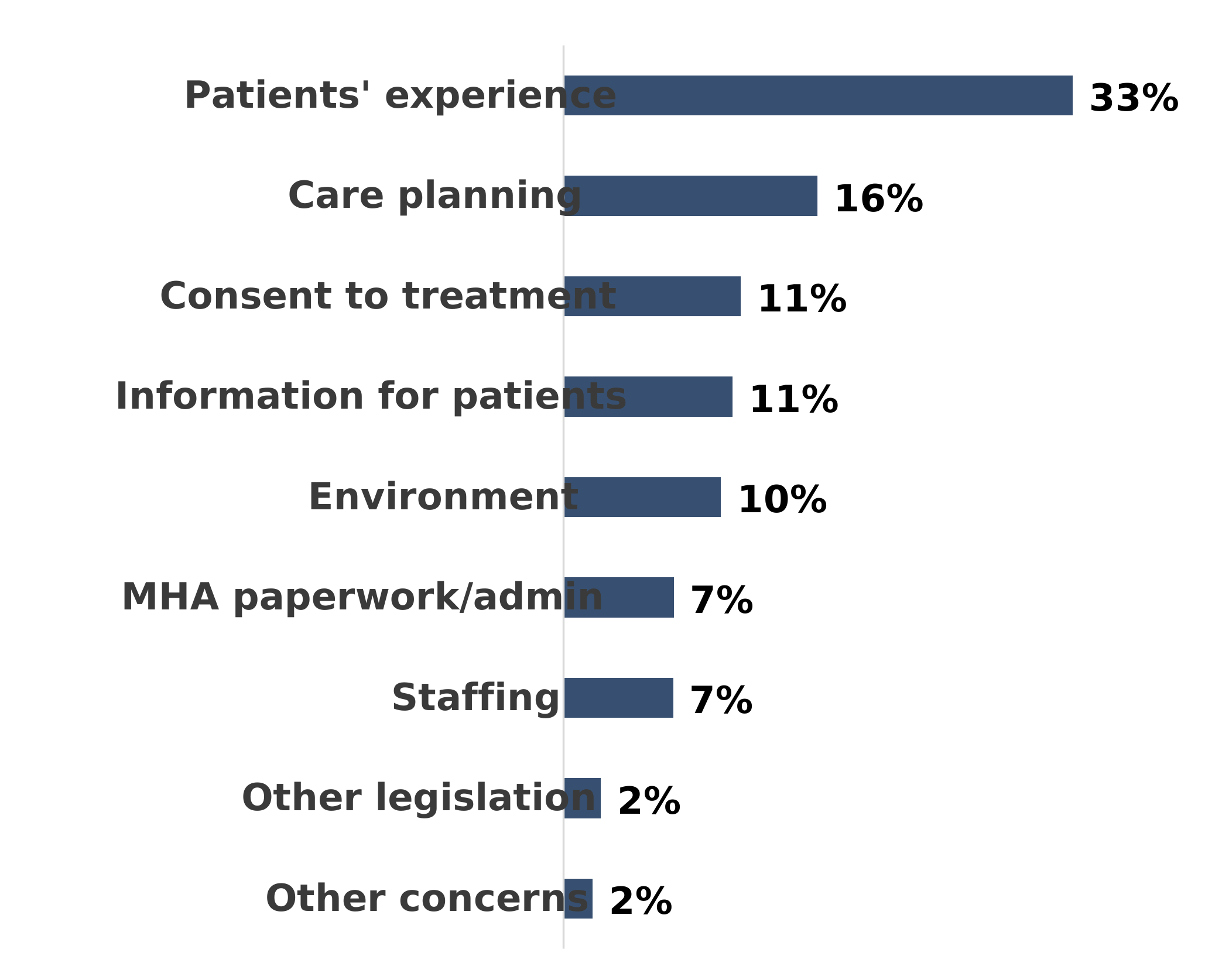
We requested 3,248 actions from providers to make improvements based on concerns found on our visits. Of the concerns we raised:
- 33% related to patient experience
- 16% related to care planning
- 11% related to consent to treatment (figure 6).
Figure 6: Themes from concerns raised with providers in Mental Health Act monitoring visits, 2024/25
Source: MHA activity data
Note: one visit may result in more than one of the same category of concern being raised.
Second opinion appointed doctor service
Second opinion appointed doctors (SOADs) are consultant psychiatrists appointed by CQC to deliver the statutory second opinions required to authorise treatment under the MHA in specific circumstances. The SOAD service provides a safeguard for people who do not have capacity to consent to their treatment or who do not consent to their treatment.
SOAD requests can be made:
- to certify medicine after 3 months from starting treatment for mental disorder after being detained
- when the patient has started a community treatment order (CTO) and it is clear a SOAD will be needed after 1 month
- when the treatment changes significantly
- when electro-convulsive therapy (ECT) is recommended.
CQC is responsible for administering the SOAD service, but SOADs make independent decisions, reaching their own conclusions by using their clinical judgement.
Depending on their assessment, SOADs will issue a certificate to approve a person’s treatment plans in whole, in part, or not at all. A SOAD can decide not to certify the proposed treatment if, in their view, this is not appropriate.
The majority of SOAD consultations are online, although the proportion of in-person visits has been rising every year for the last 3 years.
Second opinion appointed doctor requests
In 2024/25, we received 15,999 requests for a second opinion appointed doctor (SOAD), which was the highest number since 2019/20
Most requests (86%) were made for patients recorded as having no capacity to consent (10,055 requests). For detained patients on medication, 4% (405 requests) were for patients recorded as being capable of consent and refusing treatment.
Of all the requests, just over a quarter (27%) were subsequently cancelled (4,351 requests), which is a similar proportion to last year.
Of the 4,351 cancelled requests, 88% were for detained patients. Where a reason for cancellation was recorded, the majority (39%) continued to be because the patient had been discharged from hospital (1,629 cancelled requests). If a patient is discharged before the second opinion takes place, it could mean that for their entire detention period, the patient received treatment to which they did not, or could not consent, and did not receive the statutory safeguard of an independent second opinion to certify the appropriateness of the treatment.
For patients on a community treatment order (CTO), the main reason for cancellation was because the CTO was revoked (32%).
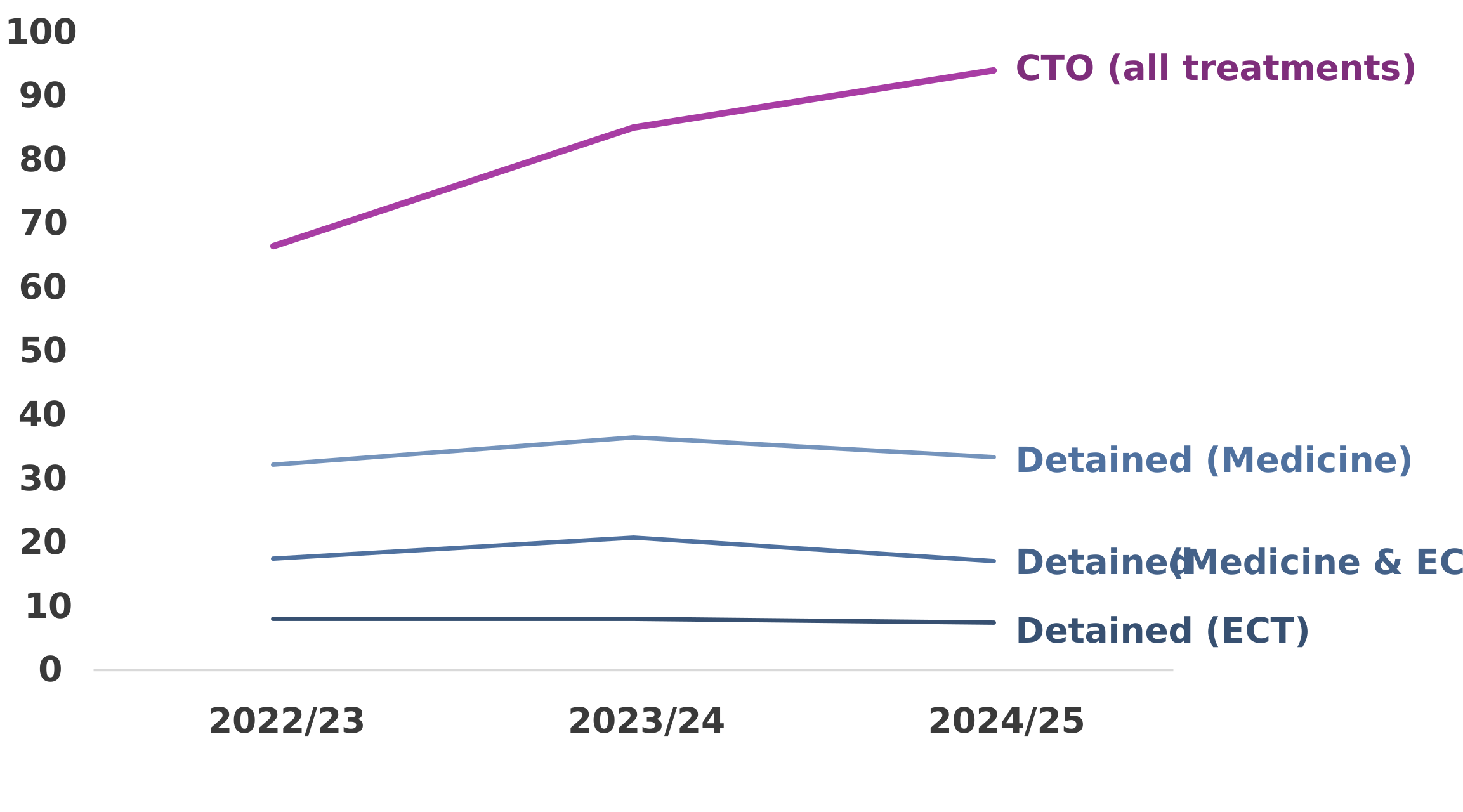
We record the number of days between a request for a SOAD assessment being submitted and the assessment taking place. In 2024/25, this reduced for detained patients for all treatment types compared with the previous year. However, in the context of a year in which the number of reported CTOs increased, the length of waiting time increased by 9 days in 2024/25 to 94 days (figure 7).
Figure 7: Average number of days from SOAD request submission to second opinion assessment, 2022/23 to 2024/25
Source: CQC SOAD data
Where ethnicity was recorded, 71% of completed requests were for White British patients (7,573) and 12% were for Black or Black British patients (1,255). However, Black or Black British patients faced considerably longer waits for SOAD assessments than White British patients – by 5 days on average. The average wait time from submitting a request to a SOAD assessment for White British detained patients was 16 days, compared with 21 days for Black or Black British detained patients. For patients on a CTO, the difference in wait times was even longer – the average wait for Black or Black British patients was 30 days longer than White British patients.
We are taking these differences in waiting times seriously and making it a priority to reduce them. It is particularly important given the systemic inequalities relating to people’s ethnicity, including Black or Black British patients, which we discuss throughout this report. We do not yet understand why these differences are happening. Requests for a second opinion are anonymised prior to appointment, so SOADs do not have access to patients’ ethnicity information when making decisions about appointments.
To address the differences in waiting times, we are continuing to analyse our data at national, regional and individual provider level to identify any national or local factors, as well as seeing whether there is a link, for example, between waiting times and the complexities of patients’ treatment plans. We will continue to monitor and report on the findings of this analysis and the actions we are taking to reduce this inequity.
Outcomes of second opinions
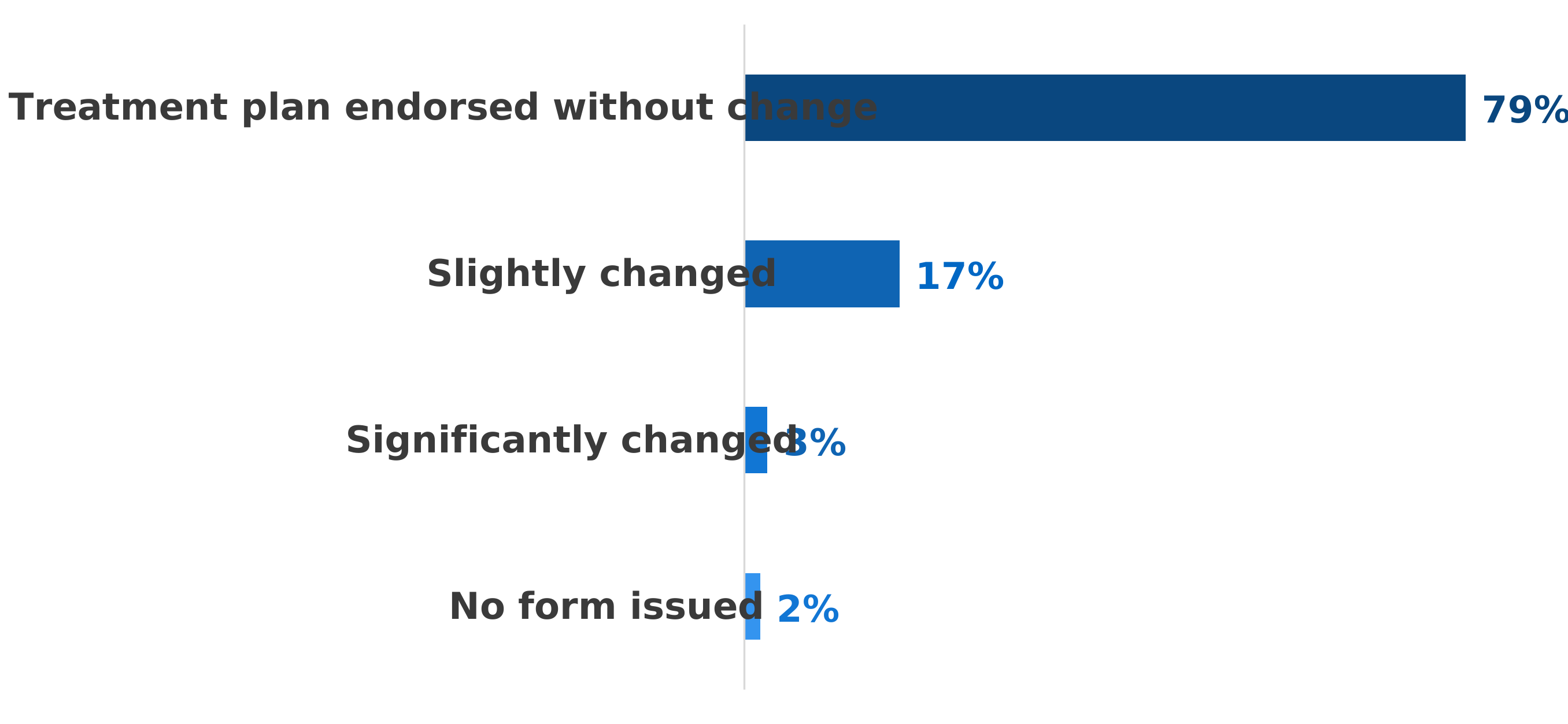
Out of 10,851 completed SOAD requests where an outcome was recorded, 79% of treatment plans were endorsed without change. Around 1 in 5 requests led to some form of change to treatment plan (slightly or significantly) or no certificate issued, which is similar to previous years (figure 8). This highlights the importance of the SOAD service as a safeguard in terms of ensuring that treatment is safe and appropriate for patients.
Figure 8: Outcomes of SOAD assessments, 2024/25
Source: CQC SOAD data
SOADs look at treatment plans that have already been formulated by a primary physician. They will question a treatment plan or modify it if, for example, evidence for its effectiveness to treat the individual patient is weak.
Providers are required under Section 61 of the Mental Health Act to report on treatment that has been certified by a SOAD. These reports are scrutinised by members of a panel of clinicians. If they find any queries or concerns, they raise them with the clinical team to resolve, but it may lead to the withdrawal of the existing SOAD certificate, so that a new SOAD review is required. Examples of these queries include:
- seeking assurance that patients on high-dose antipsychotic medication are receiving the additional physical health monitoring required
- questioning the length of courses of medication used to reduce agitation, given their rapidly decreasing beneficial effect and increased adverse effects, such as increased risk of falls.
Of the 3,758 Section 61 reports received in 2024/25, around 1 in 5 required some sort of follow-up with the provider.
Absence without leave notifications
In 2024/25, we were notified of 644 incidents of detained patients being absent without leave (AWOL). This is lower than last year (824 notifications). Nearly half (45%) of the notifications recorded the patient as being returned by third parties (mainly the police), and a third (35%) returned voluntarily.
Male patients were more likely than female patients to be AWOL. Of the 633 incidents where gender was recorded, 501 (79%) were males.
Of the 361 notifications that recorded a patient ID, 45 (15%) were AWOL more than once during 2024/25.
Reason for AWOL notification
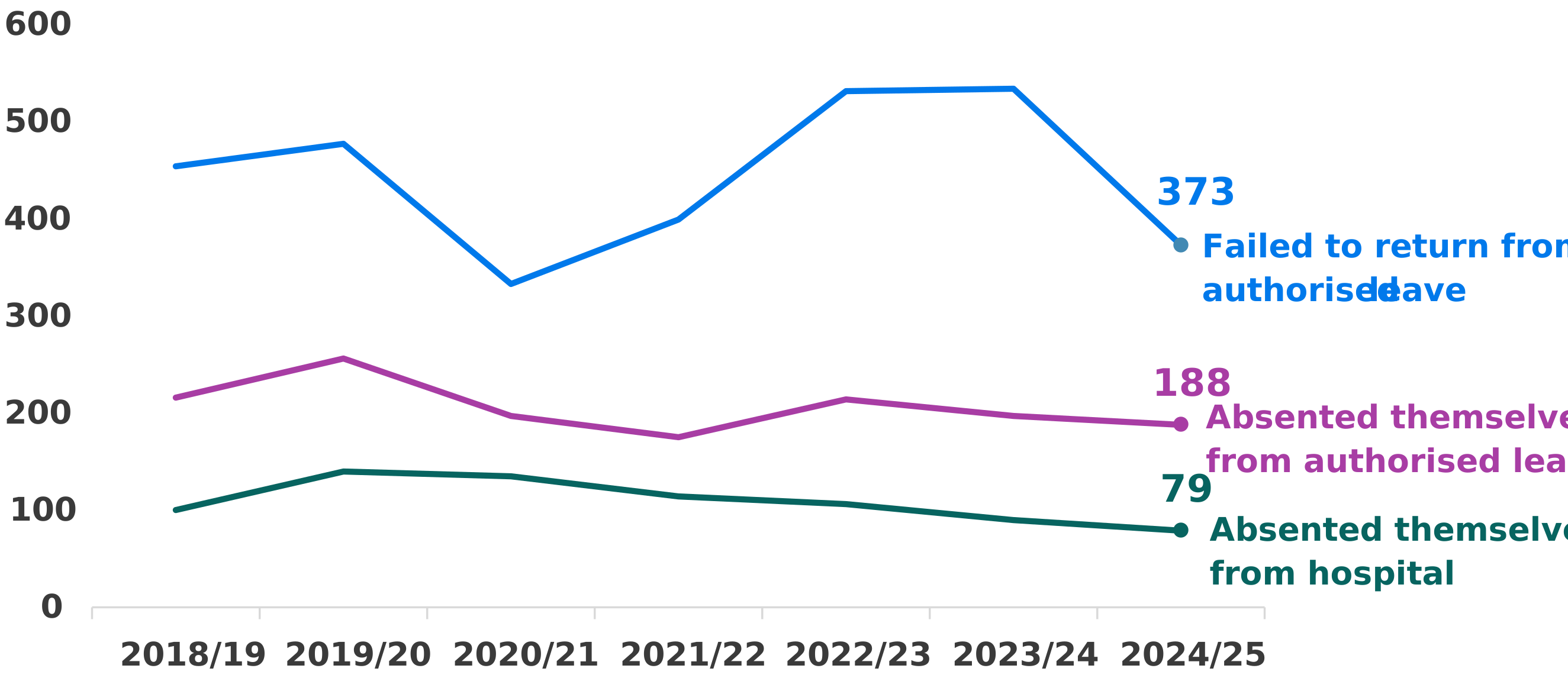
The overall decrease in the number of AWOL notifications in 2024/25 was mainly because fewer patients failed to return from authorised leave (from 534 in 2023/24 to 373 in 2024/25) (figure 9). Of these, 42% (156) returned voluntarily and 24% (89) were returned by police.
Figure 9: Reasons for AWOL notification, 2018/19 to 2024/25
Source: CQC AWOL notifications data
Note: The total each year includes patients who were AWOL on more than one occasion.
Mental Health Act complaints
CQC has a discretionary duty under section 120 of the MHA to investigate complaints relating to the care and treatment of people who are, or have been, subject to the formal powers of the Act.
During 2024/25, CQC received 2,552 complaints through the MHA complaints system.
Of these, 45% included complaints about ‘Attitude of staff’ (slightly higher than last year at 43%). Complaints about medication (27%), safety (23%) and communication (22%) were the next most common categories assigned (note that a single complaint can be assigned to more than one category).
Telephone calls are still the main channel for receiving complaints (87%). However, there was a notable rise in complaints received by email in 2024/25, to 10% compared with 4% in 2023/24.
Investigations of complaints
If patients, staff or any member of the public are unhappy with the use of powers or how duties have been carried out under the MHA, they can make a complaint to us.
We explained our complaints process and described the nature of the complaints we receive and how they are resolved in a previous Mental Health Act report. For example, people may ask us to investigate concerns that have not yet been considered through a service’s own local complaints resolution processes. In these cases, it is usually appropriate for people to try to get the complaint resolved locally. We will advise them where to look for information and, where appropriate, support them to complain to the service. Once the service has investigated the complaint, we expect them to tell the person making the complaint, and us, about the outcome.
Where local complaints processes have been exhausted, and it is appropriate for us to carry out our own investigation, the complaint will be investigated by a Mental Health Act reviewer.
We investigate when complainants tell us they’ve not been satisfied with the responses they’ve received from investigations by their mental health trust or independent hospital.
Our MHA reviewers investigated 8 complaints in 2024/25. Across the 8 investigations, the complaints covered a range of areas of concern. We either partially or fully upheld 7 of these.
The concerns we fully upheld included:
- a patient staying on a ward for 6 weeks without being seen by a consultant
- failure by a hospital to involve a patient’s nearest relative in their care
- a patient not receiving a copy of their care plan
- a trust’s failure to adhere to its duty of candour policy
- failure to obtain consent for a physical health examination.
When we uphold complaints, we make recommendations for action that providers should take to learn from the issue and to improve. Some examples of action that providers took during 2024/25 included:
- strengthening governance structures around audit processes and safeguarding data
- introducing a new risk assessment and management plans
- improving care plan compliance through oversight meetings
- reviewing documentation and procedures around care planning
- providing workshops on the Mental Capacity Act and consent, and training on investigating complaints to hospital staff.
Notifications of deaths of detained patients and patients subject to a community treatment order
During 2024/25, we were notified of 314 deaths. Of these:
- 253 were detained patients
- 61 were patients subject to a community treatment order (CTO).
Reporting of CTO deaths is not compulsory, therefore figures may be underestimated.
Of the 314 deaths:
- 174 were from natural causes (a result of old age or a disease, which can be expected or unexpected). The most prominent causes were heart disease (44 deaths) and pneumonia (42 deaths)
- 41 were from unnatural causes (as a result of an intentional cause – harm to self or by another individual, or unintentional cause – an accident). Hanging was the most prominent cause (13 deaths)
- 99 are currently undetermined (the cause of death has not yet been determined by a coroner or CQC does not hold information on cause of death).
Where gender was recorded for 285 patients who died and were detained or subject to a CTO, 64% were male (182 deaths).
Where ethnicity was recorded for 266 patients who died and were detained or subject to a CTO:
- 81% identified as White British
- 9% identified as Black, African, Caribbean or Black British – an indication of the higher rates of detention under the Mental Health Act for this ethnic group
- 5% identified as Asian and Asian British.
During the year, 6 young people (aged 20 and under) died while detained.
Nearly a quarter of deaths of detained patients were of those on Section 17 leave (72 deaths). Of these:
- 48 patients were on escorted leave when they died
- 11 were absent without leave when they died.
There were 14 deaths of detained patients where it was recorded that the patient died within 7 days of restraint.
Seven patients died during or within 7 days of seclusion or time out.