Monitoring the Mental Health Act in 2024/25
Downloads
Staffing pressures and the impact on care
Key points
- We are continuing to see systemic challenges with recruitment and retention, with 9% of roles in mental health trusts in the NHS unfilled in March 2025.
- Recruitment and retention issues are leading to significant challenges around staff experience, skills and competencies, which are exacerbating pressures on services and staff themselves, as they are feeling burnt out and overworked.
- While some wards have had good levels of staffing, with approachable and attentive staff, we have found ongoing challenges around low staffing levels. This can leave people feeling unsafe and have a negative effect on their rehabilitation and recovery.
- Patients often described staff as being caring and working hard to keep everyone safe on the wards. However, figures from our MHA complaints data highlight ongoing concerns around the attitude of some staff; nearly half of the 2,552 MHA complaints received in 2024/25 included concerns relating to the attitudes of staff.
Resourcing and capacity challenges
We are continuing to see systemic challenges with recruitment and retention. Despite an increase in the number of staff over the last few years, the size of the mental health workforce has not kept up with the rising demand for mental health care. Data from NHS Vacancy Statistics shows that 9% of roles in mental health trusts in the NHS were unfilled in March 2025. As a result, we have heard from providers how they feel they are not always able to cope with the increasing levels of demand.
Our MHA reviewers described how system pressures are having an impact on staff morale. This included, for example, compassion fatigue among staff because of high acuity levels and the increasing numbers of patients with highly complex needs. The NHS Keeping Well Service describes compassion fatigue as “the ‘emotional cost of caring for others or their emotional pain’, whereby the individual struggles emotionally, physically and psychologically from helping others as a response to prolonged stress or trauma.”
In another example, we heard how in some trusts, staff get moved around constantly between wards to cover absences and gaps in staffing, this can have a significant impact on staff morale, to the point that some staff are leaving because they feel as if they cannot cope with uncertainty. It can also affect the continuity of care people receive and have an impact on the therapeutic relationship between staff and patients.
Recruitment and retention issues are also leading to significant challenges around staff experience, skills and competencies. These gaps in the workforce are exacerbating pressures on services and staff, with staff feeling burnt out and overworked, and that they are constantly ‘firefighting’, with little long-term impact. This is supported by data from the 2024 NHS Staff survey, which shows that for mental health and learning disability trusts, and mental health, learning disability and community trusts:
- less than half (49%) of people felt able to meet all the conflicting demands on their time
- over a third (34%) of people reported always or often finding their work “emotionally exhausting”
- a quarter (26%) of people reported they were always or often feeling “burnt out because of their work”.
Effects of low staffing
Staff have a huge influence on people’s experience of being detained in hospital under the MHA. A positive, therapeutic relationship with staff is a key element of inpatient care and can help patients to engage with treatments and interventions, leading to a better outcome. Therapeutic relationships play an important role in helping to create a culture where people feel psychologically safe, where they feel comfortable expressing themselves.
A fundamental factor in building these supportive and therapeutic relationships is having consistent staffing.
Through our analysis of MHA monitoring reports we found that patients valued having consistent relationships with named staff, which allowed them to be involved in their care and treatment plans. Regular contact with trusted and familiar staff also allowed for better communication and support for individual preferences, including involving family and carers. Some wards that we visited have had good levels of staffing, and in others we’ve heard from patients how, despite being very busy, staff made time for them and remained approachable and attentive.
However, other reports have described challenges around low staffing levels, which can prevent people from developing therapeutic relationships and can leave them feeling unsafe (see also section on demand and system pressures).
As well as vacancies, staffing levels were affected by sickness, incidents requiring staff intervention or staff needing to provide enhanced levels of support and observation for people on the ward with higher acuity levels. For example, we heard how, in some wards, a lot of people were on enhanced observation as they were experiencing considerable levels of distress. As a result, staff were not readily available or were not quick enough to respond. At one ward, almost all patients told us they did not feel safe on the ward. The majority of patients said this was because they felt there were not enough staff around to support them.
Low levels of staffing affected people’s rehabilitation and recovery. For example, people were unable to access all areas of the service, such as outdoor environments for fresh air, or they were not able to take a shower as there were not enough staff available to observe them. It could also lead to having to cancel daily activities and section 17 leave. People described how this left them feeling frustrated or that it would negatively affect their level of confidence.
We have seen the effects that low staffing levels could have on people in long-term segregation through our Independent Care (Education) and Treatment Reviews (IC(E)TRs) programme. Being able to spend time outside long-term segregation was important for people because it meant that they could:
- experience reduced restrictions
- practise being in different environments
- connect with peers and family members
- participate in interests and hobbies they enjoyed.
However, we found examples where low numbers of staff meant that people could not spend time outside of long-term segregation because leave could not be facilitated. This seemed to be because more staff or specialist members of staff were needed to facilitate leave but they were not available.
The following experiences highlight this issue:
On the day of our visit…night staff were below planned levels. A patient who had been secluded in their bedroom on [the] ward told us that although they left their bedroom every day for fresh air, due to a shortage in staffing they were not able to spend long outside of their bedroom.
Extract from MHA monitoring visit report
A patient previously in bedroom seclusion told us they had requested food and drinks from staff. However, there had not been enough staff to open the door to give them the food or drink. They said when their observation levels decreased it had been harder to get staff to support their needs.
Extract from MHA monitoring visit report
There were current staffing difficulties on the ward, which included a deficit in the availability of allied health professionals. The occupational therapy team told the panel they had plans in place to support the person to spend time out of long-term segregation but were unable to offer this support until at least 3 months after the review date.
Extract from IC(E)TR report
As highlighted in this year’s State of Care report, issues with staffing are also leading to significant challenges around staff experience, skills and competencies. Our MHA reviewers described how some wards may appear to have adequate staff numbers, but there was not always the appropriate skill mix and knowledge among staff, which could affect how clearly staff communicated with each other, and this had led to less effective responses to emergencies.
The mix of skills and experience could be a particular problem where bank and agency staff were being used, adding to the pressure placed on staff and the service, and contributing to patients feeling unsafe. Our MHA reviewers described how agency staff are generally unfamiliar with patients, and although they can read the patients’ care plans, they do not always know how to de-escalate patients. They described how agency staff don’t have enough time to build a therapeutic relationship with patients, which can lead to less effective care and patients feeling frustrated.
In services with a high staff turnover, people were reluctant to build rapport with staff because there was “no point” in getting to know them if they would be leaving again.
Patients told us there was a high use of agency staff on the ward. They felt that non-regular agency staff did not know them well. One patient informed us that an agency staff member had restricted their use of toilet paper as they were unsure of the patient’s individual risks. Regular staff intervened and the issue was resolved quickly.
Extract from MHA monitoring visit report
This theme was supported by feedback from carers who told us that when they spoke with staff who did not work at the service regularly, they often did not know the patients personally and could not provide updates on their care. We heard how this difference can be more marked during weekends and night shifts, when the use of agency staff can be more common.
The challenges around bank or agency staff were also highlighted in a 2024 report by the Health Services Safety Investigation Branch (HSSIB), Workforce and patient safety: temporary staff - integration into healthcare providers. The report found that providers often had little information about the bank or agency staff they were employing, which meant they could only give them tasks on the basis of their role, rather than skill or experience. For mental health settings this meant temporary staff were commonly allocated to carry out continuous observation, as this was considered to be a clearly-defined task which was not complex.
To be therapeutic, continuous observation requires staff to build and maintain trust and rapport with the patient. The HSSIB investigation heard of many instances where temporary staff carried out this role for many hours at a time. As we raised in our Monitoring the Mental Health Act annual report 2021/22, enhanced, continuous observation provides an opportunity for prolonged therapeutic engagement. However, it can be difficult and exhausting for both patients and staff. Carrying out continuous observation for many hours on end, particularly with staff unknown to the patient, increases the risk of this becoming a passive activity rather than active therapeutic engagement.
Guidance from NHS England on enhanced therapeutic observation states that, while senior nurses provide overall clinical governance for enhanced therapeutic observation, the nurse in charge on the ward is responsible for allocating ward staff to perform observations, ensuring the skill mix is safe and appropriate for both the ward and patient, and ensuring that staff have regular breaks.
One MHA monitoring report shared similar concerns about bank staff sleeping during night shifts and how this led to patient observations being neglected. When we raised concerns about this, the provider responded by contacting all ward staff to remind them to take care of their wellbeing, while reminding them of the consequences of being found to be sleeping on shift. The ward management team also removed staff from the bank who were found to have been sleeping on shift.
MHA reviewers who took part in our focus groups also told us they had seen examples of agency staff sleeping during night shifts. They explained that because agency staff work at different locations, and sometimes for multiple agencies at the same time, it is harder to have a clear oversight of the hours they work. This means that they might do consecutive shifts and end up exhausted by the time they have night shifts.
Low staffing levels can also affect people’s ability to get their care reviewed by a Second Opinion Appointed Doctor (SOAD). As we reported last year, ongoing difficulties with the funding of the service and insufficient numbers of SOADs has led to a backlog of requests and delays in delivering second opinions. While we are working to reduce these backlogs, communication challenges with hospitals can lead to additional delays in people receiving a second opinion. For example, we have heard about SOADs being unable to contact the ward on the phone to book an appointment as phones go unanswered, or staff are unable to book SOADs into the ward because either no staff are available, or the staff member is too junior to have permission to book on the system.
Attitudes of staff
Members of our Service User Reference Panel (SURP) highlighted the importance of patients feeling able to approach staff with their concerns. One SURP member described how approachable staff are conducive to a person’s recovery.
This was supported by the findings of our analysis of MHA monitoring reports. Several reports highlighted how staff attitudes were important in making patients feel supported and safe. Patients often described staff as caring and working hard to keep everyone safe on the wards. Some patients described how positive attitudes and behaviours contributed to an overall positive atmosphere on the ward, potentially minimising the incidence of violence.
Patients felt safe. They told us the current patient group got on well together and one patient said, “it’s like a second family”. We were told that there were sometimes arguments and shouting, but violence on the ward was rare.
Extract from MHA monitoring visit report
Patients also commented positively on staff who respected their privacy, for example, by knocking on their room doors before entering. One patient highlighted the importance of being treated with respect when in seclusion, to preserve their dignity, for example when showering or using the toilet.
We spoke with a patient in seclusion who told us the observing staff interacted with him and treated him with respect. Male staff completed his observations when he was using the shower and toilet area.
Extract from MHA monitoring visit report
Analysis of our MHA monitoring reports highlights how patients feel more able to share safety concerns with staff who are friendly, helpful and approachable, which helped them to feel safe on the wards. Feeling that staff listened to their concerns seemed to be particularly important for some of the patients who had previous experience of violent assaults within the wards.
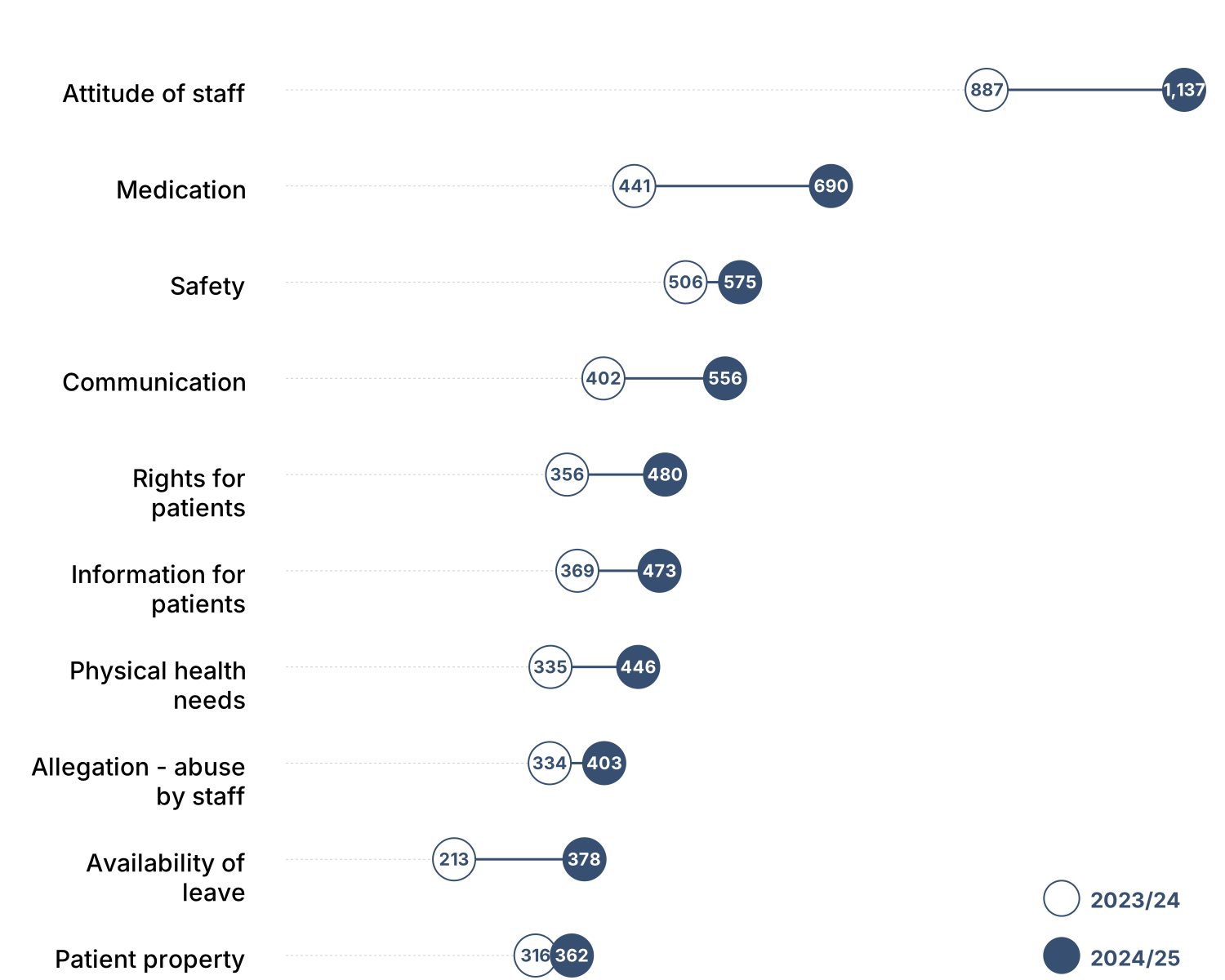
However, figures from our MHA complaints data highlight ongoing concerns around the attitude of some staff. Out of 2,552 MHA complaints received in 2024/25, 45% included concerns about the attitudes of staff, ranging from therapists and nurses being unwelcoming and/or rude, to staff being inattentive (figure 1).
Figure 1: Number of complaints about use of the MHA by category, 2023/24 and 2024/25
Source: CQC MHA complaints data
Note: A single complaint can be assigned to more than one category, therefore the figures above total more than the overall number of individual complaints.
Erin’s story
Erin first began struggling with her mental health as a teenager. She was self-harming and once she’d finished her GCSEs she was doing so more often. By the age of 17, her parents were struggling to take care of her at home and the children and young people’s mental health service admitted her to an acute adult ward at an NHS mental health hospital as there were no beds available in any mental health inpatient units for children and young people.
After an ‘awful’ 4-month cycle of being discharged then readmitted to hospital, Erin was admitted back to the adult NHS ward that she was originally admitted her to, where she was diagnosed with borderline personality disorder (BPD). This began her 9-year journey through the mental health system.
For 6 years, Erin was detained in various independent mental health services, including high dependency units, psychiatric intensive care units and forensic services. During this time, because she was considered such high risk, Erin was frequently held in overly restrictive environments, often in seclusion, with constant observation and, in many cases, a lack of access to therapy or therapeutic activities.
At one service early in her journey, Erin was diagnosed with a schizophrenia spectrum disorder and told that she didn’t have BPD. When she told staff that she didn’t have a schizophrenia spectrum disorder, they described her as ‘treatment-resistant’. She was prescribed clozapine – an antipsychotic medication primarily used to treat treatment-resistant schizophrenia. Erin struggled with being on clozapine, becoming overweight and describing how it made her very sleepy for much of the time she was detained, “I was like a zombie”, she said. “I was just so zoned out and overmedicated”.
Erin also described being on the receiving end of poor staff attitudes. For example, at one service, she was not trusted to use a toothbrush and went months without being able to brush her teeth. As a result, her dental braces disintegrated because they hadn’t been cleaned for so long. She described how the staff bought her an enormous novelty toothbrush ‘because she wouldn’t be able to swallow it’. This was the first time Erin had tried to brush her teeth in months and the staff laughed at her while, desperate for basic dental hygiene, Erin tried to brush her teeth with the novelty toothbrush. She ended up laughing too because she’d normalised being humiliated by this point.
Throughout this period, Erin describes feeling ‘written off’ by staff – at one point staff told her parents, on multiple occasions, that she was ‘never going to get out’.
In 2020, Erin was moved to an NHS medium secure unit, which provided the person-centred care she needed to help her recover. Erin described feeling like she was “viewed as a human being, not as a problem or someone who needed to be kept”, and that staff believed in her, and didn’t penalise her for self-harming. For example, she described how the occupational therapist found her a non-swallowable toothbrush with a big handle that she could keep in her room, enabling her to brush her teeth twice a day.
Staff also enabled her to take up art again by providing her with pastels and a bendy pen that was dissolvable if swallowed.
With the support of the staff at the unit, Erin was able to come off her medication and create a tailored care plan that focused on her recovery and discharge back into the community. Erin was discharged from hospital in January 2023 and, with the support of her partner, family and friends, is rebuilding her life. Erin went back to college in 2024 and is now in her first year of university, with the long-term goal of becoming a forensic psychologist.
(From an interview with a member of the public for this report)
Qualitative analysis of these complaints showed allegations of physical and verbal violence, as well as issues that patients raised about staff requiring them to take medicines authorised under the MHA without their consent or with no information about side effects. In some cases, patients described how the care offered to them was not always person-centred, as individual needs and personal history (such as background information, history of self-harm, and past adverse reactions to medicines) were not always taken into consideration.
This was echoed in some of our MHA monitoring visit reports. One report describes the effect of poor attitudes of staff on patients:
Some patients said some staff had poor attitudes, they could be dismissive or ignore them, or showed favouritism to some patients over others. One patient said staff had not been compassionate when removing personal items from their room for safety. Patients said they had heard some staff complaining openly about their working terms and conditions, and the patients felt this was contributing to this concern.
Extract from MHA monitoring visit report
Another report spoke of how a patient mentioned feeling infantilised when staff spoke to them, while a patient in another ward described staff as “quite scary”. We also found examples where staff were not seen as approachable or did not respond to incidents quickly enough, which left patients feeling unsafe. In one ward the behaviour of staff and the response to incidents led to a frightening environment for some patients.
One report suggested a connection between negative staff attitudes – specifically staff being “abrupt and bossy” towards patients, and a high turnover of staff. This reinforces the idea, as highlighted in the section on effects of low staffing, that consistency and regular contact between staff and patients are essential to maintaining positive relationships and ensuring their psychological safety.
Our work on Independent Care (Education) and Treatment Reviews (IC(E)TRs) found concerns around staff in certain roles not understanding, or seeing the need to support people, as part of their job. We found evidence of this lack of responsibility to support and engage with people in reports.
One report stated that “a person and their family told us that staff did not always engage and support them”. Similarly, we heard that “sometimes bank staff do not engage with them, just sit and stare at them, which can be triggering”. It seemed that some people were paired with staff who may not have viewed engaging and forming meaningful relationships as their responsibility, which has been noted as an important factor in helping people to leave long-term segregation.
This disconnected care for people – with some staff, professionals and services not recognising their responsibility to support people in long-term segregation and to progress out of it – could lead to people’s needs not being met and a longer stay in a segregated environment.