Monitoring the Mental Health Act in 2024/25
Downloads
Quality and safety of care
Key points
- We often saw that staff listened to patients’ concerns and involved them in decisions about their care. However, some care plans did not consider the patient’s individual needs.
- Our Independent Care (Education) and Treatment Reviews (IC(E)TRs) highlighted the value of staff who are able to adapt to support people’s changing requirements to reduce some of the harm of being in long-term segregation. But personalised adjustments were not always assessed and integrated into people’s care to support them to progress out of segregation.
- Services that respect human rights are fundamental to good outcomes for people. However, we are concerned that too many people are being unlawfully detained – especially those on wards for older people and those who do not have the capacity to understand their rights.
- Everyone working in health and care services has a role to play in reducing the use of restrictive practices. However, between 2023/24 and 2024/25 the average number of restrictive interventions each month rose by 24% from 13,240 to 16,462.
- We saw how low staffing levels meant that, on some wards, access to areas like bedrooms, kitchens, gardens, living spaces, and bathrooms was restricted, which patients said affected their recovery. In order to reduce restrictive interventions, we have seen technology being used to keep people safe, while giving people who are sectioned some control over their lives.
Communication and rights
Involving patients in their care
One of the key themes that affected patients’ experience was their ability to have a say about their care. Many Mental Health Act (MHA) monitoring reports described staff who listened to patients’ concerns and involved them in decisions about their care. For example, some reports described how patients participated in community meetings and had regular one-to-one meetings with named staff – using these occasions to express their views about their care plans and the everyday activities on the ward.
Regular one-to-ones with staff with whom they had built a trusting relationship also gave patients the opportunity to discuss their proposed medication, as well as preferences with contact and involvement of family and carers.
One carer said that the responsible clinician was excellent and had supported them to get physical healthcare treatment, which made a significant difference to their quality of life.
Extract from MHA monitoring visit report
However, in our monitoring we have seen instances where care plans lacked detail and did not consider the patient’s individual needs. For example, on one ward, our reviewers felt that care plans did not highlight how patients with specific, identified needs, such as autistic people, would be supported. In this case, the provider responded to our call for action by providing training on person-centred care planning for nurses and introducing a monthly care plan audit. The section in this report on Care for autistic people and people with a learning disability highlights some positive examples of patient-focused care planning.
During another MHA monitoring review, some patients reported that although they were given copies of their care plans, they had not been involved in reviewing them. In response, the service committed to the following actions:
- the ward manager to undertake a review of all care plans
- the ward manager to develop guidance for staff to ensure that care plans are produced collaboratively and when patients’ needs change
- staff to document in electronic care records when a patient refuses a copy of their care plan, saying why and when they will be approached again to encourage collaboration
- the ward manager to continue to carry out a dip sample approach to check on the impact of the above actions and repeat this monthly until assurance on care plan updates has improved.
Our MHA reviewers also noted how the use of peer support workers and family ambassadors on wards can have had a positive impact on the way people engage with services. These roles can support families, friends, and carers to get answers to their questions much more easily and can provide a direct link between the ward and the family.
The importance of communication was also a key theme in our Independent Care (Education) and Treatment Reviews (IC(E)TRs) into the care and treatment of autistic people and people with a learning disability who are in long-term segregation. We discussed the early findings from our IC(E)TRs in our latest State of Care report.
We highlighted instances where clinical teams lacked the knowledge and the expertise to work with autistic people and people with a learning disability, which could be a barrier to them moving out of long-term segregation. Shortfalls included knowing how to support people’s communication requirements and supporting them in trauma-informed and reassuring ways that reduced anxiety around change. By contrast, we also saw successful initiatives where independent stakeholders implemented a human rights-based approach and focused on staff building good relationships with people in long-term segregation to better understand their wishes and requirements.
We found evidence through our IC(E)TRs that the personalised adjustments that some people needed were not always assessed and integrated into care to support them to progress out of long-term segregation. For example, one review report notes that, “It had been long identified that the person needs a speech and language therapist assessment. However, the provider was not able to provide this due to funding”.
However, IC(E)TRs also highlighted that some staff were able to mitigate some of the harms caused by restrictions in long-term segregation by making personalised adjustments to support people’s changing requirements (for example, sensory requirements and preferences, and mealtime preferences).
Supporting patients to understand their rights
Our human rights approach to regulation states that people who use health and care services need to be empowered to understand their rights, and services that respect human rights are fundamental to good outcomes for people.
Our monitoring work continues to reveal that communication about people’s legal rights varies across services. Some services explained rights to people promptly, they documented discussions and reminded them regularly. However, at other services, people felt that their rights were poorly explained or they did not fully understand them. In some cases, patients were not given a new explanation when the legal section under which they were detained changed.
There was no indication, in any records we reviewed, that informal patients had been made aware they could leave. We reviewed several records for detained patients on sections 5(2), 2 and 3 where we could not see any evidence that information had been given to patients about their status under the MHA. The IMHA told us they had to regularly prompt staff to help patients understand their rights.
Extract from focussed MHA monitoring visit report
Services have told us how patients are referred to independent mental health advocates (IMHAs) to help them understand their legal rights. We heard positive examples where patients were automatically referred to this service if they did not have capacity to understand these rights and that information on advocacy had been made available in accessible formats. We also heard of advocates being introduced to all patients, always being notified about seclusion, and attending seclusion reviews to support patients’ views. However, in other services patients were unsure about how to access an IMHA or had not been told about the service.
Encouragingly, we have found that services often have good access to interpreters, who have been used to support various activities, such as ward rounds. Importantly, some services had used interpreters to ensure that patients understood their rights under section 132 of the Mental Health Act, where their first language was not English. However, this wasn’t always the case, with some wards either unaware of how to arrange interpreters or not using them often.
We spoke with a patient whose first language was not English. They said staff arranged interpreters for admission, ward rounds, or any important meetings, he said he did not feel like he has struggled to communicate or have his wishes known.
Extract from MHA monitoring visit report
To support better communication, we noted the use of easy read formats or pictures to ensure that important information was accessible to all patients, such as information about rights, searches, medication and sexual safety. However, there were a few occasions where this had not been provided, creating barriers to communication.
De facto detention
Our MHA reviewers expressed their concerns that too many people, especially those on wards for older people, were deprived of their liberty without clear legal authorisation.
They explained that this can happen when a person is kept in hospital while not being formally detained under the Mental Health Act or having a Deprivation of Liberty Safeguards authorisation in place to provide an alternative authority to keep them detained. As discussed in our State of Care report, applications to authorise the deprivation of a person’s liberty have increased significantly over the last decade, often resulting in lengthy delays.
MHA reviewers said that this practice has become so common it is “almost normalised”. Where patients are deprived of their liberty without a legal authorisation in place, they have no legal framework to use to appeal the deprivation of their liberty or de-facto detention. They also have no right to support from an Independent Mental Health Advocate to help them understand their rights, or to support them in raising concerns about their situation.
Supporting needs and wellbeing
Feeling listened to by staff was one of the most prominent themes from analysis of people’s feedback to the 2024 Community Mental Health Survey who had experienced both inpatient and community mental health services. People who felt listened to said staff took the time to listen to them, gave them space to share their concerns, explain things to them, and ensure they understood the process, and what was happening with their care.
Through our MHA monitoring, we saw that personalised care was possible where staff had built a trusting therapeutic relationship and had a good understanding of the person, and the person felt listened to and involved in their care.
Our MHA reviewers observed interactions between staff and patients that were kind, warm, respectful and caring.
Patients spoke in glowing terms about the staff. They said that the nurses, support workers, therapy staff, chef and housekeeping staff were very kind and respectful. One patient said, “The staff here are the most amazing people. They really care. It’s not just a job. Nothing is too much trouble for them. I can’t fault them.” Another said, “If I cry, they help. They are beautiful people. I feel blessed”.
Extract from MHA monitoring visit report
However, a participant in our focus groups held with people who use services and their families gave an example of a policy in one service that had a negative impact on patients’ health and wellbeing. Patients were not allowed access to extra food, such as fresh fruit and vegetables, but could only ‘buy in’ food from delivery companies. This meant that they were frequently eating fast food, and the participant noticed that their relative had gained weight as a result.
By comparison, our monitoring showed that on some wards, patients were encouraged to prepare their own hot meals in the kitchen, promoting self-sufficiency. We heard how, on a few wards, independent access to food and drink preparation gave patients a sense of confidence and the life skills needed to live independently.
In order to gain independent living skills, staff gave patients a weekly meal budget of £30, which patients used to shop and prepare their own meals. The ward had 2 connecting self-contained flats where patients would gain the confidence and skills to live independently and have support from staff when needed.
Extract from MHA monitoring visit report
Our MHA reviewers observed variation in how patients’ religious, cultural and spiritual needs were met. For example, several services provided access to chaplains and other religious leaders, multifaith spaces, and culturally appropriate food, including halal and kosher options. However, they also observed that some services did not provide a dedicated multifaith room or, if they did, it was ill-equipped or also used for other purposes, like storage or family visits. Lack of an appropriate space meant that some wards struggled to provide adequate chaplaincy services, as there were no quiet spaces to reflect and meet patients’ spiritual needs.
The multifaith ward in the wider hospital lacked compass directions meaning that patients, such as those from the Islamic faith, would struggle to identify the correct direction to pray in. The room was also missing a clock and had limited religious material available to patients.
Extract from MHA monitoring visit report
Several services arranged activities, events and initiatives that celebrated religion and culture, including visiting local churches and mosques, group sessions, visits from external organisations and activities to celebrate religious festivals. Some services had also created activities and initiatives to support people living with dementia.
On the day of the visit we observed a music reminiscence group in progress. The trust had recently commissioned a reminiscence newspaper, 10 copies of which would be delivered daily and were available for patients. Staff told us there was an orientation group each day and the newspaper would form part of that discussion.
Extract from MHA monitoring visit report
It is important to understand the distinction between religious and cultural needs. Our reviewers have not always found patients’ cultural needs being met on the wards, especially regarding hair and skin care – for example, Black women not being given the right hair and skin care to meet their needs. However, patients have also told us about a ward that “had access to a barber who specialised in Afro-Caribbean hair”.
Restrictive practices
The Human rights framework for restraint asserts that “Restraint that amounts to inhuman or degrading treatment can never be justified”, but that this is “more likely… when it is used on groups who are at particular risk of harm or abuse, such as detainees, children and disabled people.”
In last year’s Monitoring the Mental Health Act report, we affirmed that although restrictive practices are appropriate in limited, legally justified and ethically sound circumstances in line with people’s human rights, our expectations are that everyone working in health and care has a role to play in reducing their use.
Through our MHA complaints function, we have received feedback about inappropriate use of restraint, where people told us of staff using excessive force on people, causing bruises, marks, and being left with feelings of “humiliation” and “degradation”. Although we have continued to find examples of services that have been able to reduce the use of restrictive interventions, national data shows an increase in the number of reported incidents.
Mental health inpatient settings report occurrences of restrictive practice through the Mental Health Services Data Set (MHSDS). The level of reporting has continued to increase in inpatient settings, which could in part reflect better reporting practices across providers, but analysis of this data suggests that more people were subject to restrictive interventions more often between 2023/24 and 2024/25, with the average number of restrictive interventions each month rising by 24% from 13,240 to 16,462. Also, the average number of people subject to restrictive interventions each month increased by 22% – from 2,929 to 3,563 (figure 2).
This is further supported when looking at the number of restrictive intervention types (such as physical, chemical, or mechanical – use of belts and other restraints, and seclusion). The average monthly number of restrictive intervention types has risen by 26% between 2023/24 and 2024/25.
Figure 2: Number of restrictive interventions per month, 2023/24 and 2024/25
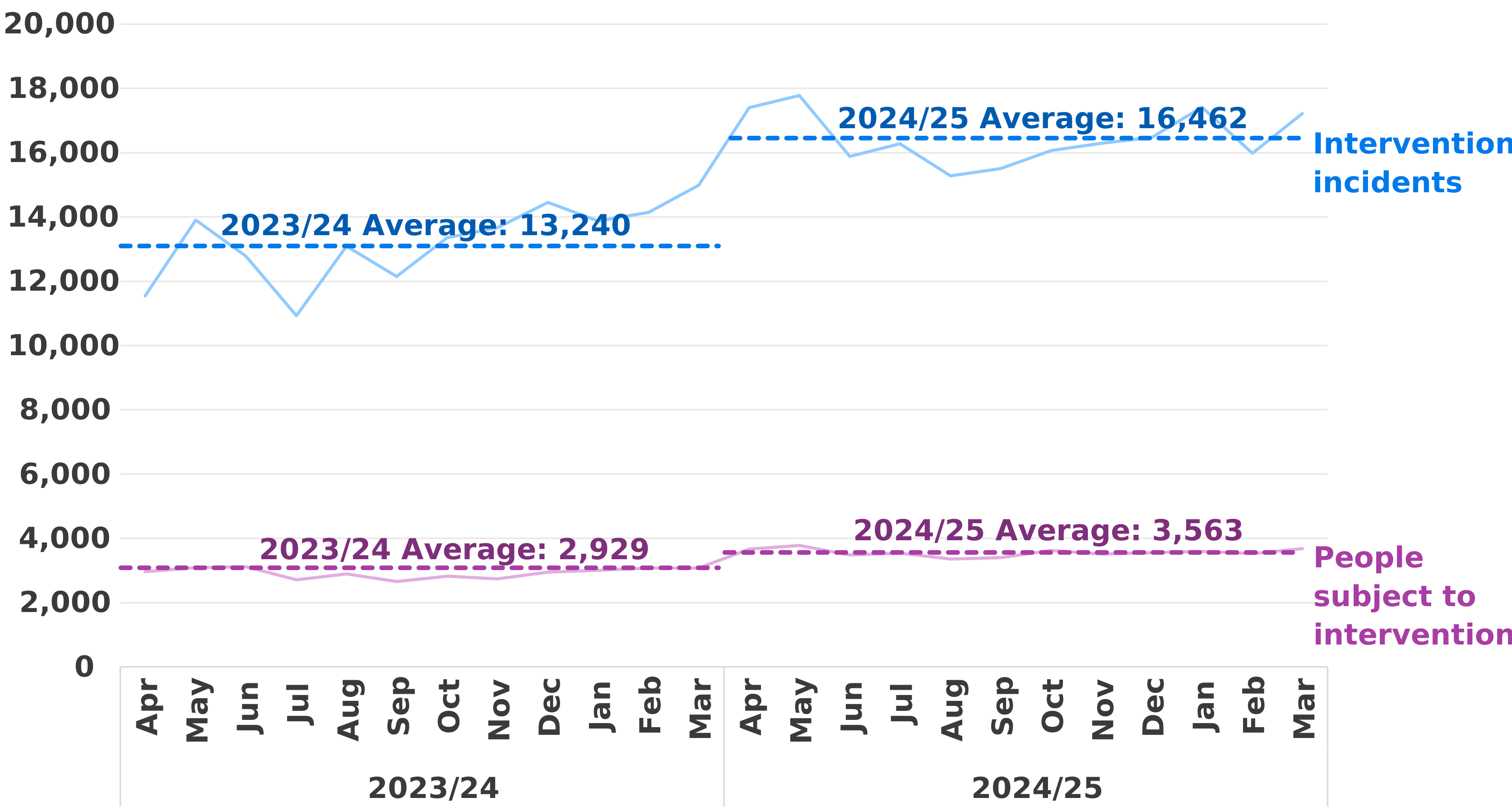
Source: NHS England’s Mental Health Services Dataset monthly statistics.
Many of the seclusion and segregation rooms we saw met the design requirements of the MHA Code of Practice, and patients were supported appropriately. For example, in one service independent advocates who covered 3 wards told us that when they saw patients in seclusion they were wearing their own clothes and had been given food and drink at regular intervals and on request.
However, some rooms were not meeting requirements. For example, in one room the mattresses were too thin and close to the ground, which could be particularly difficult for patients with impaired mobility. Some seclusion rooms were also in need of a clean and needed repair work to doorframes and paintwork.
The [seclusion] room was not clean and ready for use. There were splashes of what appeared to be bodily fluids on one wall and there were remnants of dried tissue/toilet paper on another.
Extract from MHA monitoring visit report
On many wards, staff told us they rarely used the seclusion or segregation room or did not use them at all, and a few wards did not have any seclusion facilities. We heard how this was because they wanted to reduce the use of restrictive practices on the ward, with some wards telling us they used other de-escalation methods in the first instance, such as verbal de-escalation and low-stimulus quiet rooms.
Some services we visited were using bedrooms for seclusion, with one service’s policy stating that "a patient’s bedroom for the purpose of seclusion or other isolation should be based on clinical rationale and not due to a lack of suitable designated seclusion facilities".
Patients on ward who had experienced bedroom seclusion told us they had not been restrained prior to their period of bedroom seclusion. Two patients said they had felt safe in their bedrooms and were aware of the reasons why they had been secluded. One patient told us there had been no issues staying in touch with family and friends during seclusion and they were able to access fresh air and activities off the ward daily. All patients told us they had access to a television, activities and games in their bedrooms.
Extract from MHA monitoring visit report
Patients used our complaints process to tell us about occasions when they believed they had unfair restrictions placed on them. These usually involved leave (both escorted and unescorted) and visits from relatives and loved ones. Restrictions also included policies on personal possessions and everyday items. Patients sometimes felt these restrictions were enforced solely as a way to punish them for behaviour that staff considered unagreeable, rather than to guarantee the safety of the patients themselves. It is important that services are open about their rationale for restrictions wherever possible, to avoid such perceptions.
We saw through our monitoring that, on some wards, access to various rooms was restricted for all patients, including bedrooms, laundry rooms, kitchens, gardens, living spaces, and bathrooms. We mention in this report how this is partly due to low levels of staffing. Some patients said this had an impact on their recovery.
During our visit we saw blanket restrictions where patients were not able to access fresh air or use the laundry room without staff supervision. This was due to these areas needing to be accessed through a locked fire door and were noted on the blanket restriction register. Patients we spoke with said not being able to access fresh air when they wanted was restrictive.
Extract from MHA monitoring visit report
To reduce restrictive interventions, we have seen services using technology to keep people safe, while giving people who are detained some control over their lives.
Patients had wrist fobs that were programmed according to an individual risk-assessment to allow or restrict patients’ access to any room or patient area, and to the outside balcony attached to the ward, so they could go out for fresh air. Access could be programmed to scheduled times, so access was available at some times but not others, based on clinical need and individual risk. This removed the need for blanket restrictions related to locking rooms, enabling a least restrictive approach. The services gave us an example where 2 patients could access the laundry independently using their fobs – but only at alternative times to avoid known potential triggers for conflict.
Extract from MHA monitoring visit report
In our last MHA monitoring report, we acknowledged that periodic observation by staff during the night, while often necessary, can disturb patients’ sleep and be experienced as severely intrusive. We noted that some services have adopted digital contactless patient monitoring technologies in part to lessen this disturbance. Such systems have had a controversial reception from some service user groups, and in 2025 we published guidance on our expectations in relation to practice around these.
Other services are rethinking whether the common practice of regular night-time checks for every patient is necessary or proportionate. The Sleepwell project, initiated by the Positive and Safe Care team at Cumbria, Northumberland, Tyne and Wear NHS Foundation Trust, used individualised risk-assessment to identify patients who could be allowed a ‘protected sleep period’ between midnight and 6am, where no checks were carried out. Although this was not suitable for all, for many patients this has been found to be safe and effective, with the added benefit of better sleep helping patients get the most out of their treatment in the daytime. We are pleased to note a number of services are now piloting this scheme with a view to adopting it.
Discharge
In our 2024/25 State of Care report, we highlighted from feedback that the increasing pressure on mental health services is leading to people being discharged from services before they were ready, increasing the risk of relapse or re-admission.
As discussed earlier, our MHA reviewers have raised concerns about a lack of beds in step-down wards, which leads to patients being discharged home inappropriately.
We have also seen through our monitoring that the availability of residential or nursing care homes can cause delays to discharge:
We were told that one current patient had been turned down by [many] care homes on the basis of their complex needs and presentation. In another case, a patient’s relatives had been unhappy with the proposed care home but no appropriate placement had been identified. These patients had been admitted to the ward for nearly 1 year instead of the average length of stay of 2-3 months.
Extract from MHA monitoring visit report
The inability to move into a step-down ward or a place in the community can have a negative impact on people. Delays can keep patients in a ward that is no longer appropriate for them, or where they experienced more restrictive conditions than they needed. One ward told us that some people were re-admitted following discharge because there were either no appropriate placements available or no placement would accept them.
One carer told us that their daughter was preparing to be discharged to supported living but there had been delays. They said they were concerned that their daughter would get discouraged, undoing all the progress that she had made.
Extract from MHA monitoring visit report
More positively, we have seen through our monitoring where services have taken a joined-up approach to discharge planning:
Staff referred patients prior to discharge to the trust’s home treatment and community mental health teams for additional community support. Patients continued to receive interventions post discharge from the same responsible clinician they had on the ward. The hospital’s discharge co-ordinator supported the patients and multidisciplinary team with the safe discharge of patients.
Extract from MHA monitoring visit report
Throughout our IC(E)TR reviews, discharge planning was viewed as an important part of supporting people to leave long-term segregation. Review reports often noted that there was no discharge plan in place and recommended that providers start to create a pathway for people to leave long-term segregation by working with other stakeholders, such as commissioners and local authorities, as well as with the person and those who represent their best interests. Reasons for discharge planning not happening included:
- lack of staff skills and knowledge
- lack of leadership within the clinical team
- lack of understanding of the person’s requirements
- disagreement between stakeholders.
Experts involved in the reviews thought this lack of leadership could lead to a culture of ‘stuckness’ where, although staff might want to support someone to leave, a team might become collectively uncertain about how to do this. In our reviews, we have seen independent stakeholders from external initiatives providing the necessary leadership and direction, often implementing a human rights-based approach and focusing on staff building a good relationship with people in long-term segregation to better understand their wants and requirements.